Filter and Summarize
Category Options
Build a Filter List
A browser table derives unique category names from CSV records so a filter select can show one option per category.
Program
CSV rows often repeat values. The browser can derive a short option list from those repeated values without changing the source records.
category_options.html
Visuals: captured from real browser rendering
<script>
  const records = [
    { item: "Tea", category: "pantry" },
    { item: "Tape", category: "office" },
    { item: "Rice", category: "pantry" }
  ];
  const categories = records.map(row => row.category);
  const unique = [...new Set(categories)];
  renderSelect(unique);
</script>
Start with three item records.
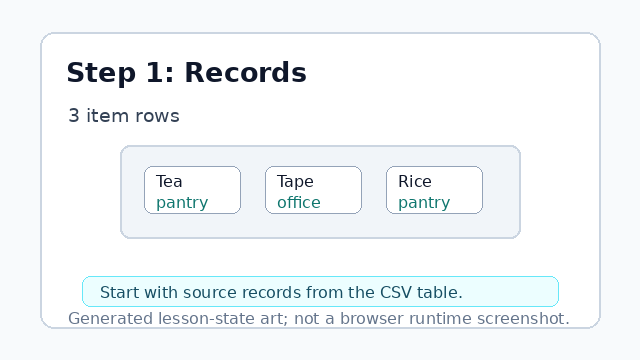
The option list starts from the full record set. Read one category from each record.
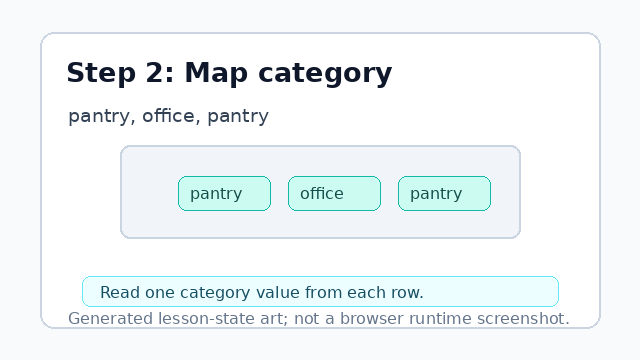
map keeps the original rows and creates a derived category array. Remove repeated category names.
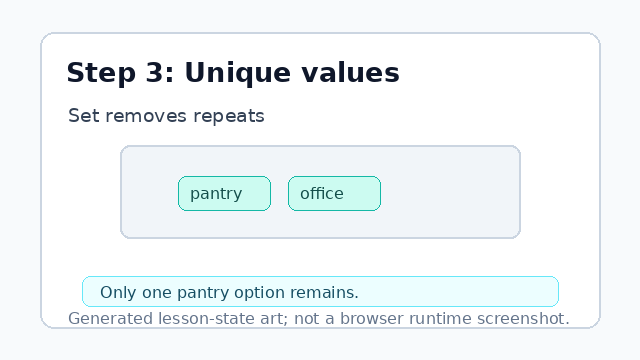
Set keeps one copy of each category. Spread the Set back into an array.
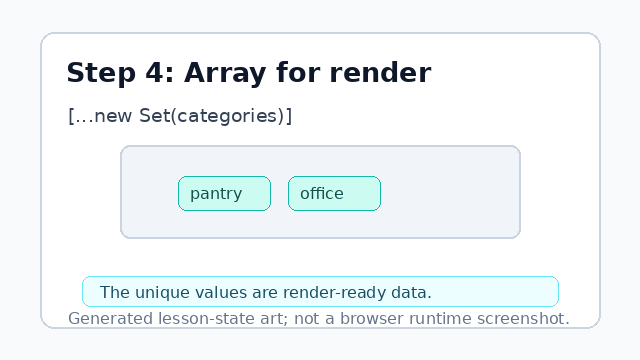
The spread syntax turns the Set into data a renderer can map. Render the category filter options.
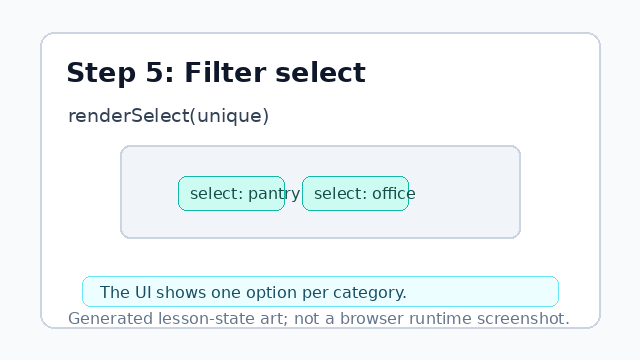
The UI now offers one option for each category in the records.
map
map creates a new array by reading one value from each row.
Set
A Set keeps one copy of each value, which is useful for filter options.