Browser Diagnostics Ladder
Source to DOM Tree
A small article source becomes a DOM tree, then a simple rendered card.
Program
The first diagnostic ladder starts with source, reads the browser structure, names the diagnostic surface, checks the rendered result, and ends with a learner check.
source_to_dom_tree.html
Visuals: captured from real browser rendering
<article class="card">
  <h2>Order ready</h2>
  <p>Pack the receipt.</p>
</article>
Source delta: add the article wrapper.
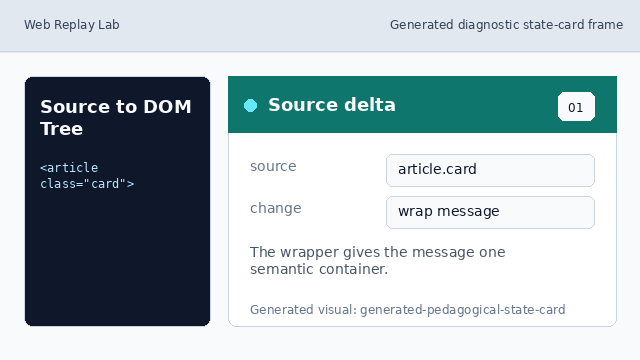
Source delta: the wrapper gives the message one semantic container. Browser structure: create child nodes.
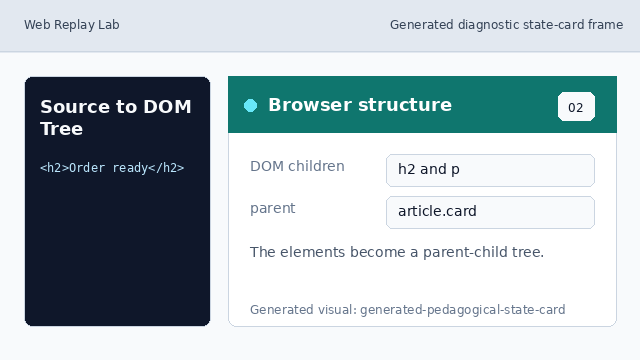
Browser structure: the elements become a parent-child tree. Diagnostic surface: inspect the DOM path.
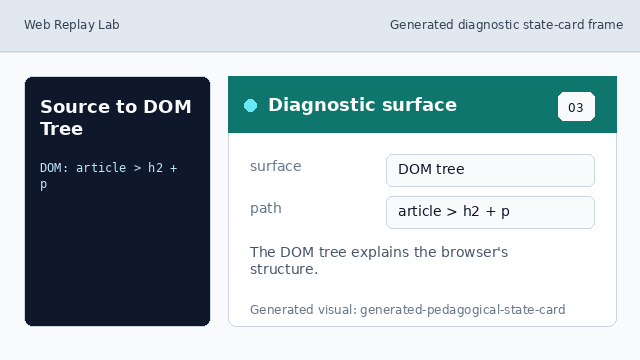
Diagnostic surface: the DOM tree explains the browser's structure. Rendered consequence: show grouped text.
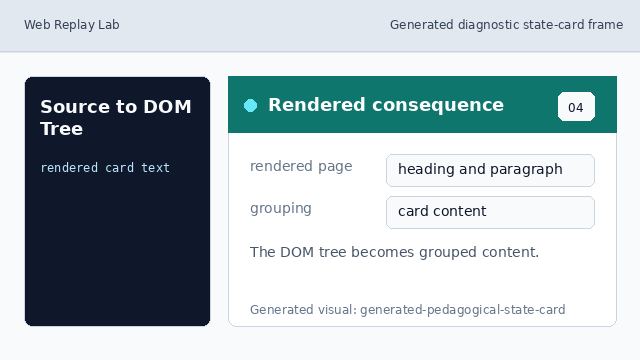
Rendered consequence: the DOM tree becomes grouped content. Learner check: match source to DOM.
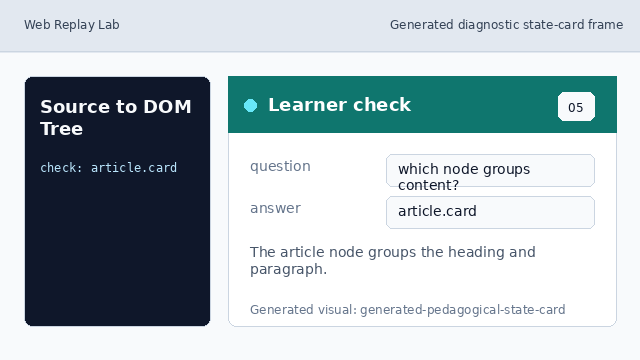
Learner check: the article node groups the heading and paragraph.
DOM tree
The DOM tree is the browser's structured version of the source elements.
rendered consequence
The same structure becomes visible text and grouping on the page.